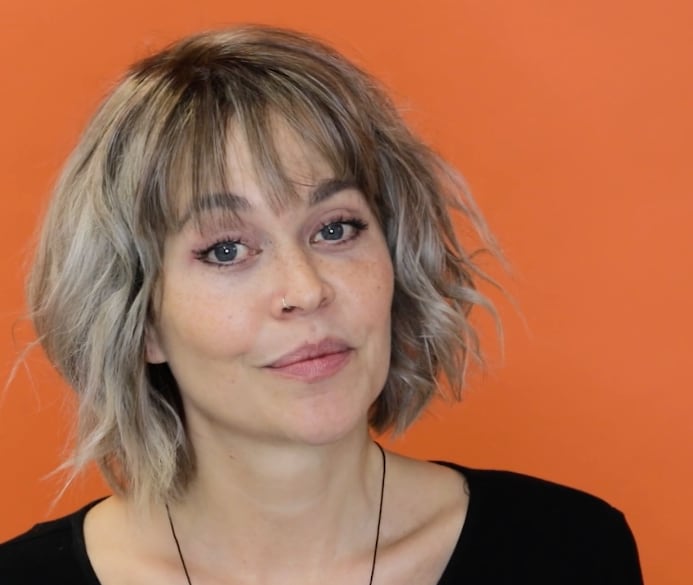
Claudia Schildknecht, CEO and Co-Founder Gelavena
Gelavena: How Switzerland’s First Oat-Based Ice Cream Brand Turns Flavor, Impact and Design into a Scalable Business
Gelavena has grown from a Lucerne side project into Switzerland’s only dedicated oat-based ice cream manufactory, selling over 40,000 portions and generating CHF 82,000 in 2025—without big marketing budgets. In this interview, founder Claudia Schildknecht explains why she refuses to compete with dairy on its terms, how fixed-per-unit donations hardwire real impact into the business model, and why a team shaped by art, gastronomy, design and crisis reporting may be exactly what it takes to build the next generation of food brands.
OOMNIUM: Gelavena is Switzerland's only oat-based ice cream manufacturer and has already sold over 40,000 portions, generating CHF 82,000 in revenue in 2025—without major marketing budgets. How did you manage to validate this market demand, and what were the decisive moments that showed you that you have a scalable business model?
Claudia Schildknecht:
We didn't validate the market in a traditional sense. We started selling and said yes to every reasonable opportunity in our first seasons: restaurants, events, ice cream bikes, partner shops. That gave us something more valuable than any market study, namely real reorder rates and real conversations with chefs and shop owners.
The decisive moment wasn't a single one but a pattern. When restaurants began asking for exclusive flavors developed for their concept, we understood we weren't selling a product. We were selling a collaboration; it’s also just way more fun to develop it in such a way. That scales differently than commodity ice cream because each partnership creates a story, a loyal venue, and word of mouth we don't pay for. Storytelling is our thing anyway.
CHF 82,000 in 2025 without meaningful marketing spend tells us the foundation is solid. We're now funding the infrastructure so we stop being the bottleneck ourselves.
OOMNIUM: What strategic decisions did you deliberately make differently than other plant-based food startups, and what advice would you give to founders trying to survive in a consolidating market?
C.S.: Most plant-based startups make one of two mistakes. They compete with dairy on dairy's terms, or they lead with the ethical argument and expect customers to pay a premium for virtue. Both are losing positions in the current direction of the dairy backlash.
We chose a third path: oat ice cream worth ordering for flavor and craft alone, with plant-based as a feature, not the headline. Our exclusive restaurant collaborations are a good example. Each partner gets a flavor developed specifically for their concept, available nowhere else. They're not buying our ice cream because it's plant-based, they're buying it because it fits their menu and no one else has it.
OOMNIUM: You're seeking CHF 441,000 (with CHF 58,500 already secured via CLA) to expand your production capacity, solidify your business foundation, and open your first gelateria "Orbicella" in Lucerne in 2026. How exactly do you plan to deploy this capital from the OOMNIUM funding round, and what milestones should be achieved with it?
C.S.: The CHF 441,500 is allocated across five areas. CHF 60,000 for First Home, our gelateria Orbicella in Lucerne, combining gelateria, café, and community space. CHF 130,000 for a second location from autumn 2026, with our own production facility, a shop as a second point of sale, office, and community space. CHF 80,000 for an Operations Manager joining in autumn 2026. CHF 40,000 for marketing and growth, mainly influencer work and targeted advertising. CHF 81,500 held as reserves for stability.
Milestones: Orbicella live in Lucerne, a second location with our own production from autumn 2026, and an Operations Manager in place. We're not promising hypergrowth. We're promising a controlled step up from a validated base.
To founders who think they need the textbook team: the textbook team might build the textbook outcome. If you want to build something that doesn't already exist, you probably need people who haven't already done it.
OOMNIUM: Gelavena is more than a food business—you've embedded social and environmental impact directly into your business model with CHF 0.10 per ice cream for Wildlife Action Group Malawi and CHF 1.00 per tub for women's shelters. Many startups struggle to reconcile profitability and impact. How did you structure this balance from the beginning without impact becoming a marketing gimmick?
C.S.: We structured it as a fixed contribution per unit from day one. That's the only way it stays real when things get tight. If impact is a marketing line item, it's the first thing cut when margins compress. If it's priced into the product, it survives every difficult quarter.
The structure also forces honesty. The contribution is mechanically tied to sales, so we can't overclaim. Customers and partners can do the math themselves. It's not a campaign, it's how the unit economics work. And we chose causes we have a direct connection to and can speak about substantively, rather than picking what polls well.
OOMNIUM: You're planning to open your first gelateria "Orbicella" in Lucerne in 2026 and build your own production infrastructure. This is a major operational leap from 35+ partner shops and ice cream bikes to a permanent location. What convinced you that now is the right time for this step, and what risks have you consciously accepted?
C.S.: We've already proven demand through 35+ partner shops, the ice cream bikes, and our restaurant collaborations. People pay for our product in environments we don't control that much. Orbicella gives us, for the first time, a home — people ask about it very often — where we can then show the full range of what oat-based ice cream can be and build a direct relationship with end customers in Lucerne.
The risks we've accepted: a permanent location means fixed costs that don't pause in the off-season, and gastronomy is operationally heavier than wholesale. We're moving from shipping product to also running a venue, with staff, opening hours, and the daily realities of hospitality.
We accept those risks because staying purely wholesale caps our margin and keeps us dependent on partner decisions. Orbicella is also the proof of concept for any future location.
OOMNIUM: Your team combines expertise from art, gastronomy, design, 3D motion, and international crisis reporting—an unusual combination for a food startup. How do you specifically leverage these diverse backgrounds as a competitive advantage, and what would you tell founders who believe they need a "classic" startup team to be successful?
C.S.: A classic startup team would have built a more efficient version of something that already exists. That's not what we want. Our team comes from art, gastronomy, design, 3D motion, and international crisis reporting; it’s also the reason why we started. Every product decision gets tested from angles a pure food-industry team wouldn't reach for.
A few examples: our flavor development draws on cultural and culinary references most ice cream brands wouldn't touch, which is exactly why restaurant partners come to us for exclusives. Our visual identity is built by people who actually understand design, not from a brief handed to an agency. Most of us work at the top of different industries as freelancers—some of us also at the highest level worldwide. And the crisis-reporting background brings a real instinct for how impact partnerships should be communicated honestly, which matters when we talk about our bridges.
To founders who think they need the textbook team: the textbook team might build the textbook outcome. If you want to build something that doesn't already exist, you probably need people who haven't already done it.